Public Lands Are Worth Far More Than the Price Tag of a Sale
Public lands deliver an estimated $507 billion in benefits to the American public every year
In June 2025, Senator Mike Lee of Utah proposed adding a provision to President Trump's "One Big Beautiful Bill" that would have made more than a quarter of a billion acres of US Forest Service and Bureau of Land Management land in 11 Western states eligible for sale. Framed as a solution to America's housing-affordability crisis, the provision included no affordability requirements and no restrictions on who could buy the land. It was ultimately stripped from the bill before passage, but it was the largest proposed sell-off of federal land to date, and it likely won't be the last. By September 2025, the Trump administration had taken actions that could collectively eliminate or weaken protections from more than 175 million acres of US lands. With mass-scale privatization continuing to ramp up, it's worth examining what these places actually provide to people, versus what they would provide to potential corporate buyers.
In a recent analysis published in Scientific American, NPAC researcher Dr. Kyle Manley synthesized publicly available datasets on accessibility, wildfire risk, land cover, biodiversity, and ecosystem service valuations to evaluate what would be lost if these lands were sold. Two findings stood out. First, these lands are deeply unsuited for the affordable housing they were supposedly meant to provide: just 3.5% lie within an hour of a city, more than half fall into high or very high wildfire-risk categories, and the rare overlap of low fire risk and short commute is almost entirely in remote Alaska. Even if homes could be built and insured, they would remain out of reach for the families most in need of affordable housing.
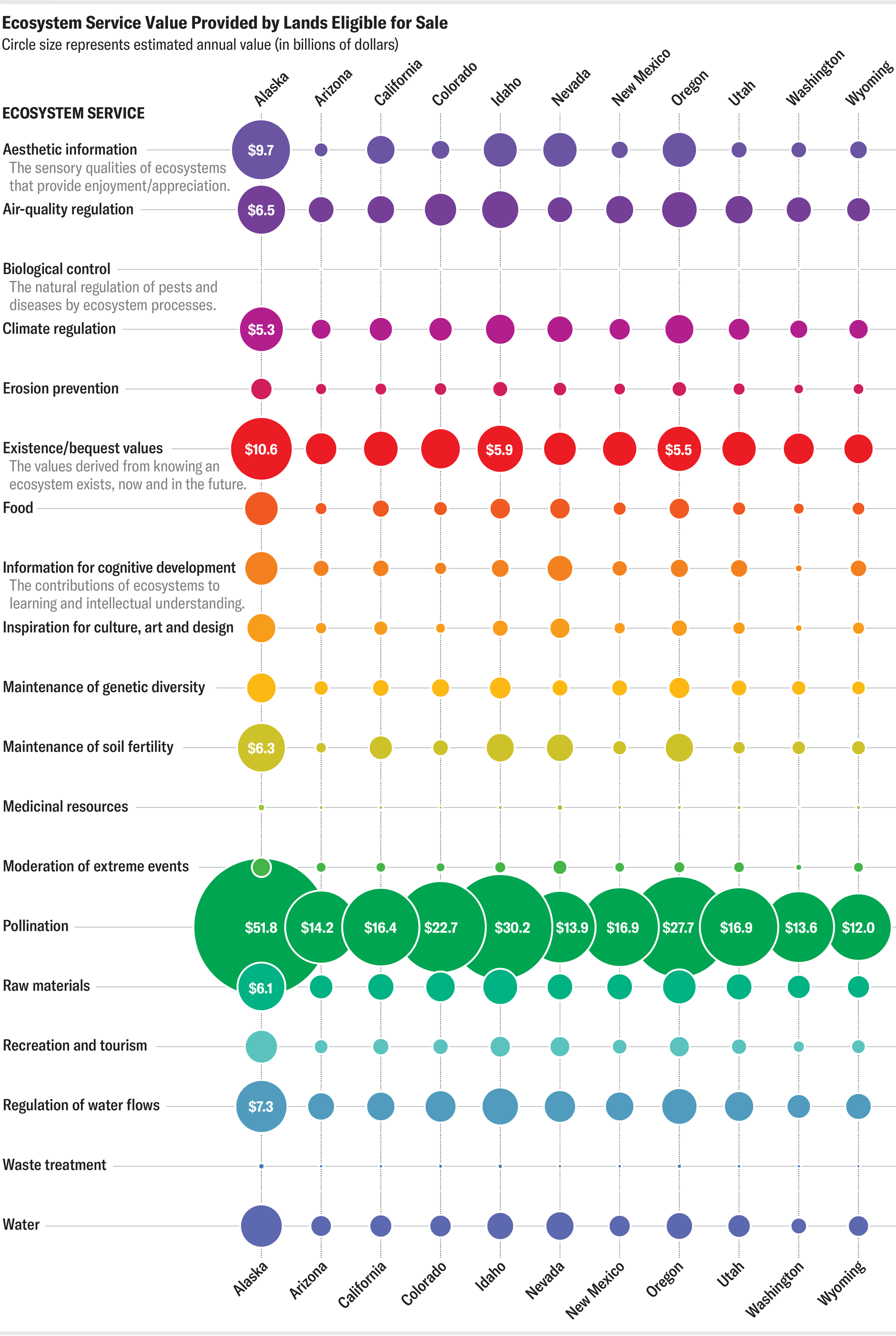
Second, these lands deliver an estimated $507 billion in benefits to the American public every year, from pollination that underpins our food systems, to water regulation supporting downstream populations, to clean air, recreation, and the cultural and existence value of simply knowing these landscapes endure. What would vanish if they were sold isn't "barren wasteland," as advocates for privatization often describe it, but vibrant ecosystems delivering hundreds of billions of dollars' worth of services to the public, while the proceeds of any sale would primarily benefit the ultra-wealthy.
These findings reveal a deeper tension in how value is defined in conversations about public lands and conservation. Privatization advocates frame these lands as underused assets ripe for development.
The reality is that they are already working for the American public, sustaining the food, water, air, biodiversity, and cultural connections that define daily life across the country.
Yet this second kind of value, what academics call non-market and non-material values, is routinely externalized from how policy decisions are made. This gap between what nature provides and what we account for extends well beyond the privatization debate into land management, climate adaptation, and conservation policy more broadly. NPAC was founded to advance the science that makes these full values legible to policymakers. As pressure on our public lands continues to grow, that work is more urgent than ever, ensuring the ecological and human dimensions of these landscapes are seen, valued, and protected for everyone who depends on them.
